How to Stop Hitting Snooze
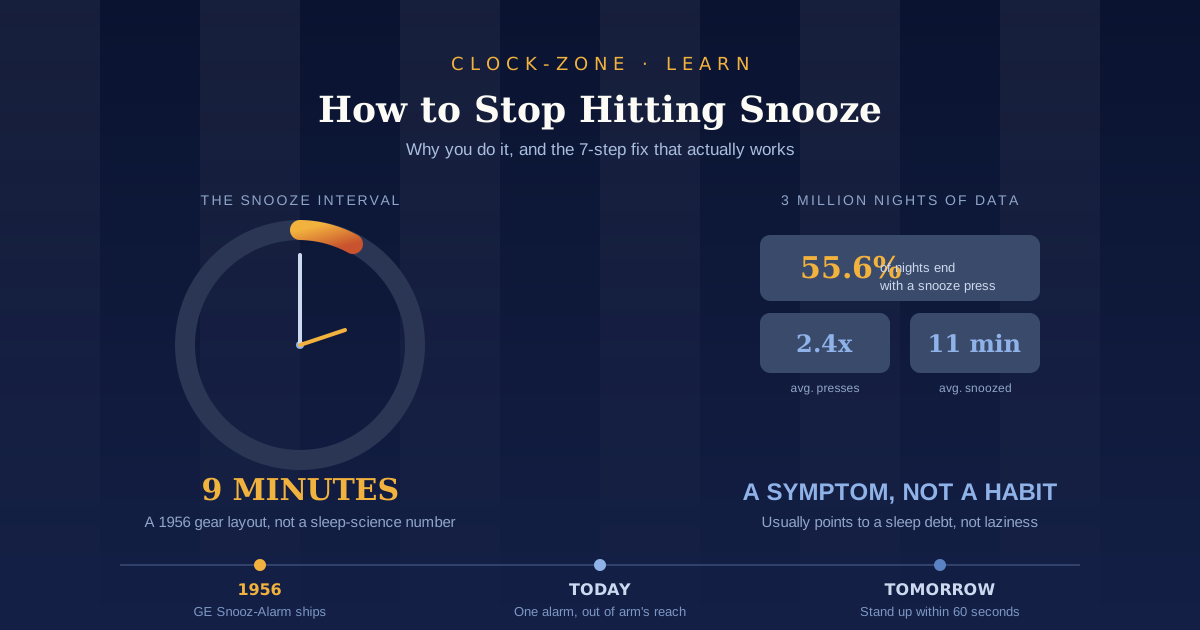
TL;DR: Most people snooze because they're short on sleep, not because they're lazy. Snoozing fragments your last stretch of sleep and can stretch out morning grogginess, though the research is more mixed than the headlines suggest. The reliable fix is one alarm, set for the latest realistic time, placed out of arm's reach, followed by immediate light and movement. Fix the bedtime, not the morning.
If you hit snooze this morning, you're in the majority. A study of more than three million nights of sleep data found that 55.6% of them ended with a snooze alarm. That's not a fringe bad habit. That's the single most common way humans wake up.
So let's drop the guilt part. Hitting snooze is rarely a discipline problem. It's usually a signal, and the signal is worth reading before you try to override it.
This guide covers what's actually happening in those nine minutes, what the research really says about whether snoozing hurts you (the answer is more interesting than "yes"), how much sleep you're losing, and a specific method for stopping that treats the cause rather than shouting at the symptom.
Why Do You Hit the Snooze Button?
You hit snooze for three main reasons: you didn't get enough sleep, your alarm woke you out of deep sleep and you're in the grip of sleep inertia, or your body clock naturally runs later than the time you've set. Snoozing is usually a symptom of a schedule problem, not a willpower problem.
The demographics back this up. A study of 450 full-time working professionals found 57% of them snoozed, with women, younger adults, evening chronotypes and people with more disturbed sleep all more likely to be snoozers.
The lead researcher's summary of that finding is worth sitting with. As he told MedicalXpress, so many people snooze because so many people are chronically tired.
There's a fourth reason that gets overlooked: anxiety. In a survey of university students, 70.5% used the snooze function mainly to reduce worry about oversleeping. The extra alarms aren't really about extra sleep. They're insurance.
If any of that sounds like you, the fix isn't a harsher alarm. Keep reading.
What Actually Happens in Those Nine Minutes
Start with a fact that surprises most people: the nine-minute snooze has nothing to do with sleep science.
A 1950s manufacturing compromise
It comes from the General Electric-Telechron Snooz-Alarm, released in 1956 and marketed as the world's most humane alarm clock. The designers wanted ten minutes. But as SlashGear traced in its history of the feature, the existing gear layout inside the clock wouldn't line up for a round number. They settled for just under ten, and the interval stuck. Your phone inherited a 1950s manufacturing compromise.
Not much rest, and a restart every time
So what do you get in that window? Not much rest.
The sleep you grab after your first alarm is light and broken. Lab work has found that snooze alarms extend time spent in stage N1, which is the drowsy, barely-asleep stage at the shallow end of the sleep cycle. Every time the alarm sounds again, you're forced back to the surface.
Meanwhile you're already inside sleep inertia, the transition state between sleep and full alertness. During it, reaction time slows, working memory suffers and decision-making gets worse. For most people morning sleep inertia lasts 15 to 30 minutes, and complex thinking takes a bigger hit than simple physical tasks.
Nine minutes isn't long enough to recover anything. It's just long enough to restart the process.
Is Hitting Snooze Actually Bad for You?
The honest answer is mixed. A short snooze appears to do little measurable harm, and may even ease grogginess for people who wake up naturally late. But repeated snoozing fragments your final stretch of sleep, can prolong sleep inertia, and heavy snoozing almost always points to insufficient sleep underneath.
Here's the evidence, both directions.
The reassuring side. A Stockholm lab study using proper sleep monitoring found that 30 minutes of snoozing cost participants only about six minutes of sleep, with no clear effects on mood, the cortisol awakening response, or overall sleep architecture. It also prevented people from being yanked out of deep slow-wave sleep. The researchers concluded that a brief snooze may actually help late chronotypes and people with morning drowsiness feel slightly more awake once they get up.
The less reassuring side. A Japanese laboratory study comparing snoozers with single-alarm wakers found the opposite: using a snooze alarm prolonged sleep inertia, likely because repeated forced awakenings drag out the transition. And a sleep scientist quoted in Scientific American points out that other research has found increased sleep inertia and worse cognitive performance among habitual snoozers.
So who's right? Probably both, for different people and different amounts of snoozing.
The more useful conclusion is this: the snooze button is not really the problem. It's a thermometer. If you need it every single morning, the thing worth fixing sits eight hours earlier.
How Much Sleep Are You Actually Losing?
The average snoozer presses the button about 2.4 times and spends roughly 11 minutes snoozing per morning. Over a month that adds up to close to a full night of sleep. Heavy snoozers press about four times and spend 20 minutes, while light snoozers average around three minutes.
Those numbers come from the largest study on the subject, covering over three million nights.
A few patterns inside that data are worth knowing.
Weekdays are much worse than weekends. People snoozed noticeably less on Saturday and Sunday. That gap is a schedule mismatch, plain and simple. Your weekday alarm is fighting your body clock in a way your weekend one isn't.
Longer sleepers snoozed more, not less. People logging nine or ten hours hit the button roughly twice as often as people logging six. That runs against intuition, and researchers suggest it may reflect recovery sleep or a body still catching up on a deficit.
Going to bed later than usual predicted more snoozing. An irregular bedtime shows up in your morning within about eight hours.
If you want the number to feel real: at 11 minutes a day, you're spending over five hours a year in low-quality, interrupted, barely-there sleep.
How Do You Stop Hitting Snooze?
Set one alarm for the latest realistic time you can get up, place it out of arm's reach, and commit to standing within 60 seconds of it ringing. Then get bright light on your face immediately. Keep the same wake time every day, weekends included, and move your bedtime rather than your alarm.
That's the whole method. Here's each piece.
Set one alarm, at the latest time that works
This is the recommendation sleep researchers repeat most often. Rather than setting an early alarm you'll negotiate with, set the alarm for the latest possible time and get out of bed when it rings. You get more consolidated, uninterrupted sleep, and no decision to make when the moment comes.
Work backwards from when you truly have to leave. Be honest about how long you actually need. Then set one alarm, not a chain of them, on a free online alarm clock with a label that reminds you why you're getting up.
Move the alarm out of arm's reach
Almost every sleep clinician recommends this, and it works for a simple reason: standing up is most of the battle. Once you're vertical, going back to bed requires a conscious decision instead of a reflex.
Putting the alarm on a laptop or tablet across the room works well. So does a large online clock left running on a second screen where you have to walk over to see it.
Give yourself a 60-second rule
Don't negotiate. Don't evaluate how tired you feel. Feeling awful at the moment the alarm rings is sleep inertia, and sleep inertia is a liar. It tells you that you need more sleep at exactly the moment more sleep won't help.
Count to five, put your feet on the floor, stand up. Decide about the day afterwards.
Get light on your face immediately
This is the most underrated step. When you move from dim light to bright light in the early morning, your body suppresses melatonin, raises cortisol by more than 50%, and holds off the drop in alertness that would otherwise follow.
Open the curtains. Step outside if you can. Turn every light on if it's still dark.
Keep the wake time constant, weekends included
Analysis of 675,231 nights from nearly 11,000 people found that those who woke at the same time every day had better sleep quality. Sleeping in on Saturday feels like repayment, but it shifts your clock later and makes Monday harder.
Pick a wake time you can hold seven days a week. A boring one you can keep beats an ambitious one you can't.
Move the bedtime, not the alarm
If you're consistently snoozing, you're consistently short on sleep. No alarm strategy fixes that. Working backwards from a fixed wake time to a bedtime that gives you seven to nine hours is the actual solution, and everything else on this list is support.
Shift in 15-minute steps if you need an earlier start
Trying to jump your wake time by an hour usually fails. Shifting bedtime and wake time by 15 to 30 minutes at a time lets your body clock follow along. Give each step several days to settle, using a 15-minute timer as your unit of change, then move again.
One caveat on gadgets. Smart alarms that promise to wake you during light sleep sound appealing, but they don't always identify your sleep stage accurately. Don't build your morning on one.
What to Do in the First Ten Minutes
Getting up is step one. Clearing the fog is step two, and a short deliberate routine speeds it up a lot.
Light first. Covered above, and it's the highest-leverage thing you can do in the first sixty seconds.
Then move. Any physical activity raises core body temperature and heart rate, which is exactly what your body is trying to do anyway. It doesn't need to be exercise. Making the bed counts.
Water before coffee. You've gone seven or eight hours without fluid.
Caffeine, timed sensibly. Caffeine does help. One study found 100mg on waking shortened sleep inertia and restored reaction time faster than a placebo. It takes about 30 minutes to reach full effect, so drink it and then do something else rather than waiting for it to work.
Stay off the phone. Picking up your phone in bed is functionally the same as snoozing. You're horizontal, warm, and not moving, and ten minutes vanish.
Giving this block a fixed shape helps. Set a 5-minute timer for light and movement so it doesn't blur into scrolling, or run a longer countdown timer across the whole routine on days when you're tight for time.
When Snoozing Is a Symptom, Not a Habit
Some mornings resist every tactic on this page, and it's worth knowing when that's the case.
Chronic sleep restriction. If you're routinely getting six hours, no alarm placement will fix it. Sleep inertia is worse after sleep loss, so short sleep makes the mornings harder, which makes you snooze more, which is exactly the loop.
Shift work. Rotating shifts put your alarm in direct conflict with your body clock. Consistency advice mostly doesn't apply. Anchoring what you can (light exposure on waking, a fixed pre-sleep routine) is more useful than a fixed clock time.
Travel and time zone changes. After a long flight, snoozing is your body clock still running on the old zone. It resolves as you adapt. Working out how far your destination sits from home with a time zone converter helps you plan the first few mornings rather than fight them.
A body clock that genuinely runs late. Some people are wired to fall asleep and wake later. That's a real trait, not a flaw, and the fix is adjusting the schedule where you can rather than treating yourself as undisciplined.
One last thing. If you consistently feel exhausted after seven or eight hours of sleep, or your morning grogginess routinely stretches on for hours, that's worth raising with a doctor. Persistent unrefreshing sleep can point to an underlying sleep condition, and no wake-up trick is the right tool for that.
Conclusion
Three things to take away.
- Snoozing is a symptom. It tells you your sleep is too short, too fragmented, or badly timed against your body clock. Read it rather than fighting it.
- One alarm beats many. Set it for the latest time that genuinely works, put it across the room, and remove the decision entirely.
- The first sixty seconds decide the morning. Stand up, get into light, start moving. Sleep inertia lifts far faster once you do.
We built Clock-Zone so time tools are instant: no download, no account, no subscription, just a tab you open and use. One user, a hospital nurse juggling night shifts and early starts, told us he sets his wake-up alarms with us every week because the quick-set presets save him the fiddling. If your schedule is unpredictable, that speed matters more than any feature list.
Set tonight's alarm on our free online alarm clock, pick one time, and commit to a single ring. Bookmark all our free time tools while you're there.
Tomorrow morning will still feel hard. That feeling is sleep inertia, not information. Stand up anyway.
Frequently Asked Questions
Is it better to snooze or get up right away?
For most people, getting up on the first alarm is better, because snoozing fragments your last stretch of sleep into short, low-quality bursts. That said, a Stockholm lab study found that around 30 minutes of snoozing cost only about six minutes of sleep and showed no clear effects on mood or stress hormones, and it may slightly help people who wake up groggy. If you snooze every day, the more useful fix is more sleep, not better snoozing.
Why is the snooze button nine minutes long?
It's a leftover from 1956. The first snooze-equipped alarm clock, the General Electric-Telechron Snooz-Alarm, was designed for a ten-minute delay, but the existing gear layout inside the clock couldn't produce a round number, so the designers settled on just under ten minutes. Digital clocks and smartphones copied the interval. There's no sleep-science reason behind it.
Does moving your alarm across the room actually work?
Usually, yes, and for a simple reason: it forces you to stand up. Standing is the hardest part of waking, and once you're upright, returning to bed becomes a conscious decision rather than a half-asleep reflex. It works best combined with immediate light exposure, since standing up in a dark room still leaves your body producing melatonin.
How long does morning grogginess last?
Sleep inertia usually lasts 15 to 30 minutes for most people, though research on shift workers and sleep-deprived groups has recorded it lasting 30 to 60 minutes and occasionally up to two hours. One large study found subjective sleepiness improves noticeably within the first 40 minutes after waking, then keeps declining over the next two to four hours. Sleep loss makes it worse and longer.
Is setting multiple alarms better than hitting snooze?
Not really. Multiple alarms are functionally the same thing: repeated forced awakenings that fragment the sleep between them. Sleep researchers generally recommend one alarm set for the latest realistic wake time, which gives you more consolidated sleep beforehand. If you use extra alarms because you're anxious about oversleeping, a single alarm you fully trust, on a device you can hear, addresses the worry more directly.